

We’re all aware that artificial intelligence is transforming how we work, learn, and make decisions. Machines are increasingly capable of performing tasks once considered uniquely human.
Yet, as AI grows more powerful, a paradox emerges: the more intelligent our machines become, the more important human skills – and human-centred training – matter.
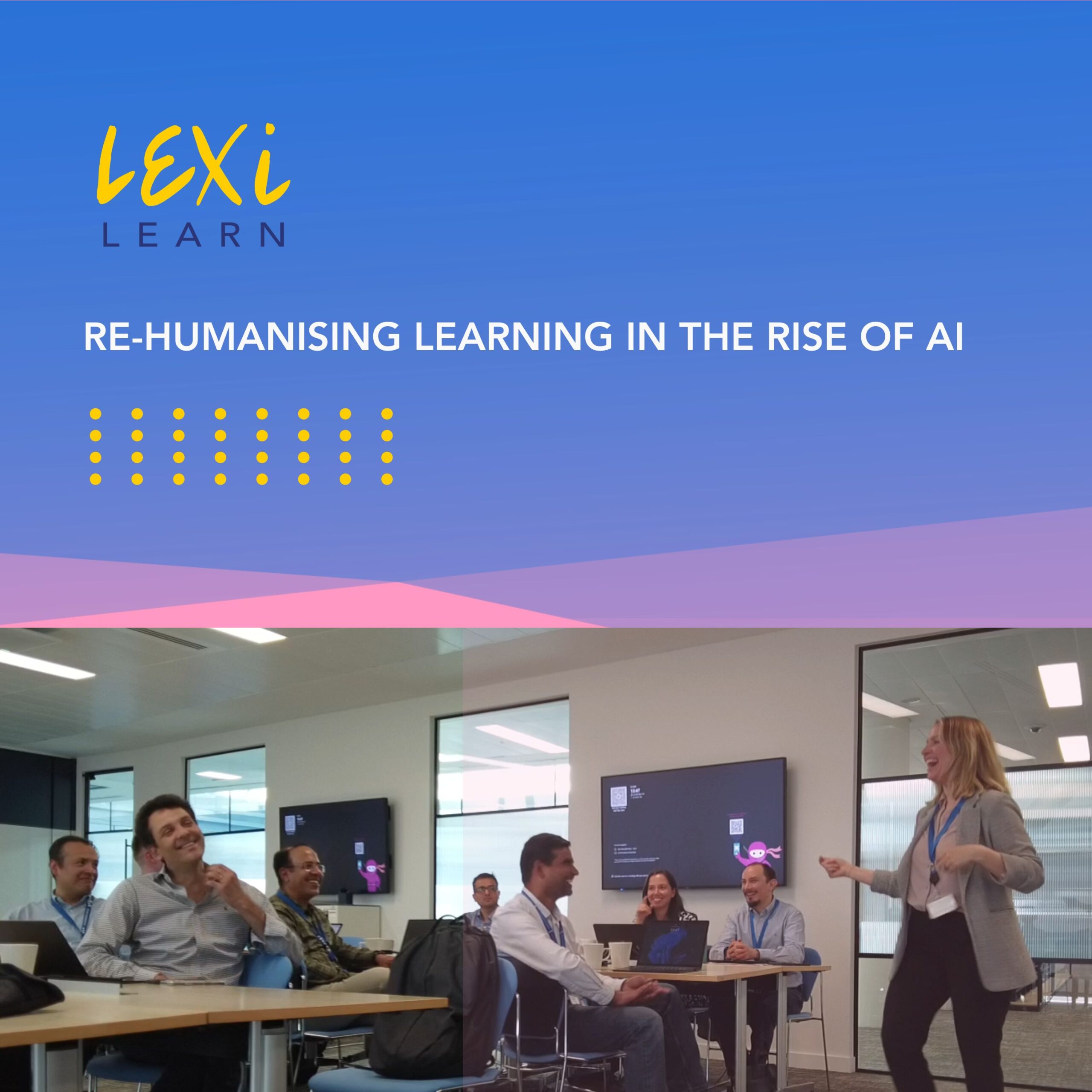
Human-centred AI is built on the idea that technology should support, not replace, human capabilities, prioritising human values, collaboration, and well-being. In this context, training methods that develop empathy, communication, ethical reasoning, and adaptability are no longer “soft skills” – they are critical to success.
Drama-based learning – an experiential training approach using methods such as skills-practice, storytelling, and simulation – is more relevant than ever.
AI has already revolutionised training environments. It can personalise content, analyse performance, and deliver real-time feedback.
However, there are clear limitations.
AI struggles with emotional nuance and cultural sensitivity. Even the most advanced systems will struggle to interpret ethical ambiguity and complex interpersonal dynamics. Highly advanced learning systems still require authentic human guidance. Research shows that combining AI with human teaching leads to:
This is precisely where human-centred training becomes essential.
Human-centred training focuses on developing the whole person, not just their technical competence. It develops:
Rather than treating learners as passive recipients of information, it positions them as active participants. In contrast to automated learning, human-centred approaches recognise that learning is fundamentally social, emotional, and experiential.
Drama-based learning is a powerful form of human-centred training that uses experiential techniques such as:
The shift is simple – participants don’t just think – they act. They don’t just understand, they do.
These methods create immersive environments where learners can practice behaviour, rather than just understand theory. This activates emotional and physical engagement, leading to greater impact and deeper retention. Learners can explore difficult situations (e.g. conflict, leadership, ethical dilemmas) in a psychologically safe environment without real-world consequences.
And crucially, unlike AI, human facilitators and peers can respond to tone, body language, and subtle interpersonal cues in real time, providing context-rich feedback. Skills practice exercises help individuals adapt to different personalities and perspectives for interpersonal social development.
As AI automates routine and analytical tasks, there is an increasing need for leadership with complex problem-solving skills and creativity. Equipping your workforce with emotional intelligence becomes essential in building a competitive advantage. These are precisely the skills drama-based learning develops.
AI systems can make recommendations – but humans must interpret, challenge, and contextualise them. That requires confidence, awareness and the ability to navigate complexity – not just process information.
Drama-based scenarios are especially effective for realistically exploring ethical dilemmas and consequences. Over-automated learning risks becoming efficient but disengaging.
Without human elements, training can feel generic and lack emotional resonance. Drama-based learning counteracts this by creating emotional connection, encouraging vulnerability and reflection, and building trust within teams.
The future of work is not humans vs AI – it is humans working with AI.
To do this effectively, individuals must understand AI strengths and also its limitations.
Drama-based simulations are particularly useful here – recreating these hybrid environments, allowing learners to practice decision-making alongside valuable AI tools.
Together, they can form a complementary system where AI enhances efficiency and humans provide depth, context, and meaning.
As AI continues to evolve, the real challenge is not keeping up with technology – it is ensuring that humans remain at the centre of the systems we build.
Human-centred training is essential for developing future-ready skills. We need to maintain ethical integrity and ensure meaningful human engagement.
In an age of AI the organisations that thrive will not be those that automate the most – but those that invest most deeply in what makes us human.
